Max Planck Schools 2027: Fully Funded MSc/PhD Programs
Applications are open for the Max Planck Schools 2027 intake in Germany, with full funding and no tuition fees. International applicants can choose from Biomedical Artificial Intelligence, Cognition, Matter to Life and Photonics. The central deadline is 1 December 2026; applicants must use the portal for their chosen School and follow its specific requirements.
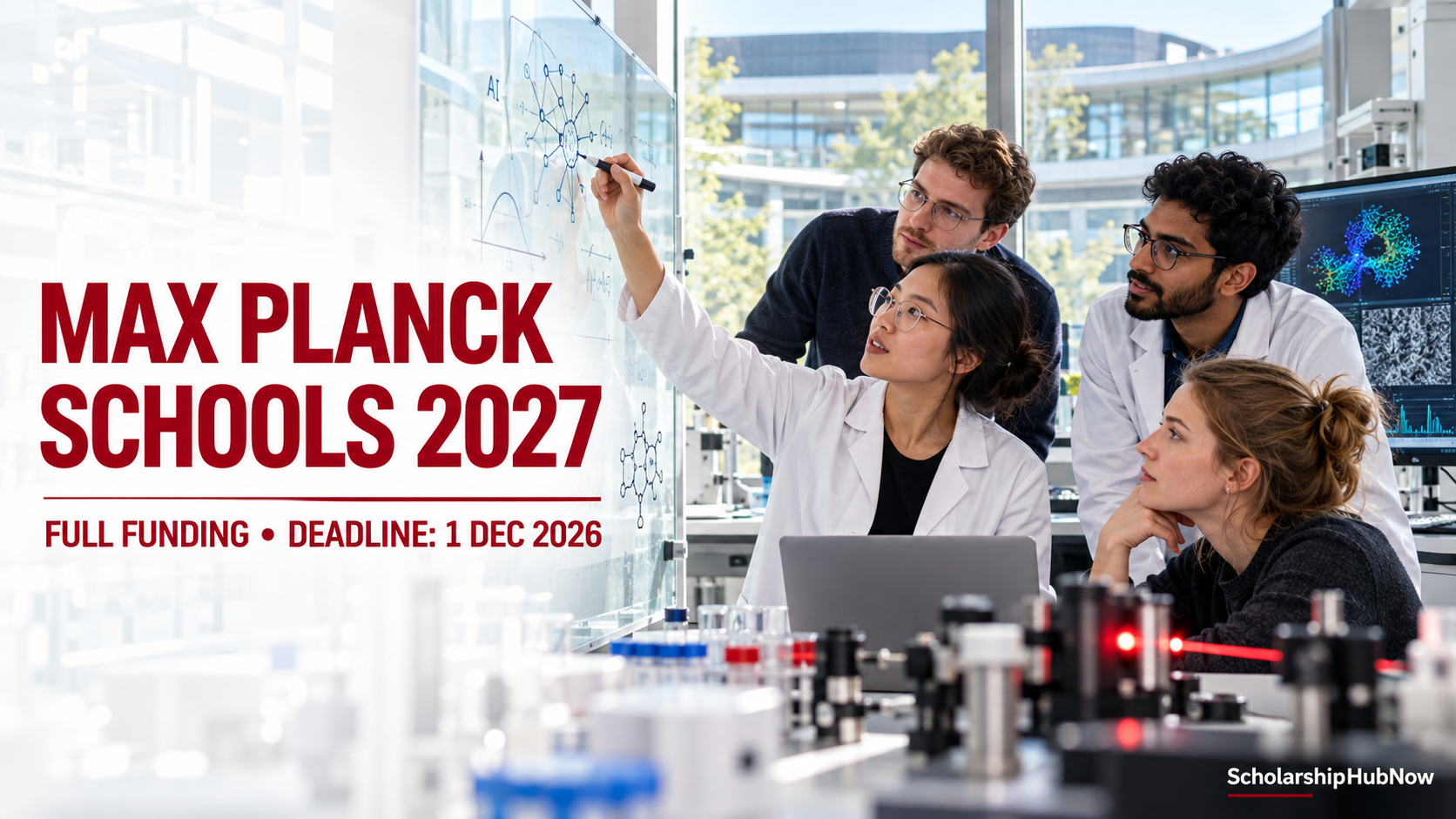
Max Planck Schools, Germany
Integrated MSc/PhD or standalone PhD
1 December 2026
Programs conducted in English
Programs available for the 2027 intake
- Biomedical Artificial Intelligence: standalone PhD training at the intersection of AI and biomedicine, intended for relevant master’s graduates.
- Cognition: interdisciplinary graduate research into biological, artificial and hybrid cognitive systems.
- Matter to Life: a five-year integrated master’s and PhD route for bachelor’s graduates in relevant scientific fields.
- Photonics: study-phase and research-phase routes covering modern photonics research.
Program structure and eligibility are not identical across all four Schools. Applicants should select the School and entry phase that matches their degree level rather than treating this as one interchangeable application.
Funding and benefits
Admission includes full funding for up to five years and no tuition fees. During an initial study phase—typically used by candidates entering with a bachelor’s degree—participants receive a scholarship and, where applicable, support for health insurance and material costs. After successful progression to the research phase, candidates receive an employment contract under the relevant German public-service agreement, normally TVöD/TV-L E13.
The package also includes close supervision across a network of German universities and research institutions, access to advanced research infrastructure and interdisciplinary training. The central page does not publish one universal monthly amount because the funding form and local contract conditions depend on the program phase and host institution.
Eligibility
- Applicants may be from any country.
- Bachelor’s graduates can apply to eligible integrated MSc/PhD or study-phase routes.
- Master’s graduates can apply to relevant research-phase or standalone PhD routes.
- Academic background must fit the chosen School. Examples include physics, chemistry, biology, computer science, mathematics, engineering, life sciences and related interdisciplinary fields.
- Applicants need the English ability required by their chosen School. Biomedical AI asks non-native English speakers for evidence of proficiency; exact accepted evidence should be checked in the School FAQ.
Required documents
Requirements vary by School, but the current official application pages identify the following common or representative materials:
- Bachelor’s certificate and transcript
- Master’s certificate or proof of current enrolment and transcript when applying to a master’s-entry PhD route
- Academic curriculum vitae
- Motivation letter or personal statement
- Passport or identity-card copy
- Contact details for two referees; some Schools require references through the portal
- English-language evidence where required
- School-specific research interests, supervisor preferences or supporting documents
For Biomedical AI, applicants name up to three potential supervisors and must submit the main application by 1 December 2026; referee recommendations are due by 10 December 2026. Photonics requires at least two referees and treats the application as complete only when the required references have arrived by its stated deadline. Applicants must therefore follow the page for their chosen School, not only the central overview.
How to apply
- Compare the four Schools and choose the research field and entry phase appropriate to your current degree.
- Open the School-specific recruitment page from the central Max Planck Schools application page.
- Register in the official online application portal.
- Enter referee details early so they have time to submit their recommendations.
- Upload the required certificates, transcripts, CV, motivation statement, identification and any School-specific materials.
- Review the application carefully and submit it before the deadline. Applications by email are not accepted for the Biomedical AI route, and the central program directs candidates to the official portal.
Deadline
The central Max Planck Schools deadline for a 2027 start is 1 December 2026. The central page does not state an exact closing time or time zone. Matter to Life specifies 11:59 p.m. on 1 December 2026 but does not state a time zone on the cited FAQ page. Do not assume this time applies to every School; submit early and use the School-specific portal instructions.
This scholarship deadline is separate from any later university enrolment or host-institution admission steps that successful candidates may need to complete.
Selection process
Each School uses a competitive, multi-stage process. Biomedical AI screens transcripts, CVs, personal statements and recommendations, then conducts scientific interviews and a final project/supervision matching stage. Matter to Life reviews grades and program fit, conducts a video interview, and invites progressing candidates to a second interview involving discussion of selected faculty publications. Selection criteria include academic strength, scientific motivation, analytical ability, creativity, interdisciplinary fit and alignment with available research supervision.
Practical applicant tips
- Choose one program because its research scope fits your preparation, not simply because funding is available.
- Show specific interdisciplinary connections in the motivation letter.
- Contact referees before entering their details and confirm the separate reference deadline.
- For Biomedical AI, identify potential supervisors whose research genuinely matches your experience.
- Upload clear, complete transcripts and explain any degree still in progress.
- Submit several days early because an incomplete referee file can prevent consideration.
Related opportunities
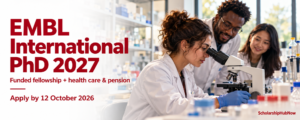
- EMBL International PhD 2027
- IMPRS Astrophysics PhD 2027
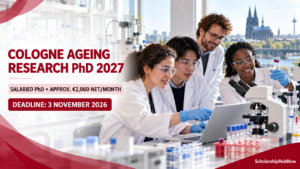
- Cologne Ageing Research PhD 2027
- Bonn BIGS Mathematics PhD 2027
Frequently asked questions
Are the Max Planck Schools 2027 programs fully funded?
Yes. The central program states that admission includes full funding for up to five years and no tuition fees, with a scholarship in the initial phase and an employment contract in the research phase.
Can bachelor’s graduates apply?
Yes, for eligible integrated or study-phase routes such as Matter to Life. Applicants must check the degree requirement for the specific School.
Can master’s graduates apply directly to a PhD?
Yes, where the selected School offers a research-phase or standalone PhD route. Biomedical AI, for example, requires a relevant master’s degree.
Is German required?
The Max Planck Schools advertise programs conducted in English. Applicants must still provide the English evidence required by their chosen School.
What is the application deadline?
The central deadline is 1 December 2026. School-specific reference deadlines or closing-time details may differ.
Official sources
- Max Planck Schools: central 2027 application and funding information
- Max Planck Society: fully funded Schools overview
- Biomedical AI application documents and selection process
- Matter to Life 2027 application page
- Photonics research-phase application requirements
Apply Now / Compare the Four Schools
ScholarshipHubNow checked these details against official Max Planck pages. Requirements can differ by School and may be updated, so use the live program page and application portal as the final authority.